
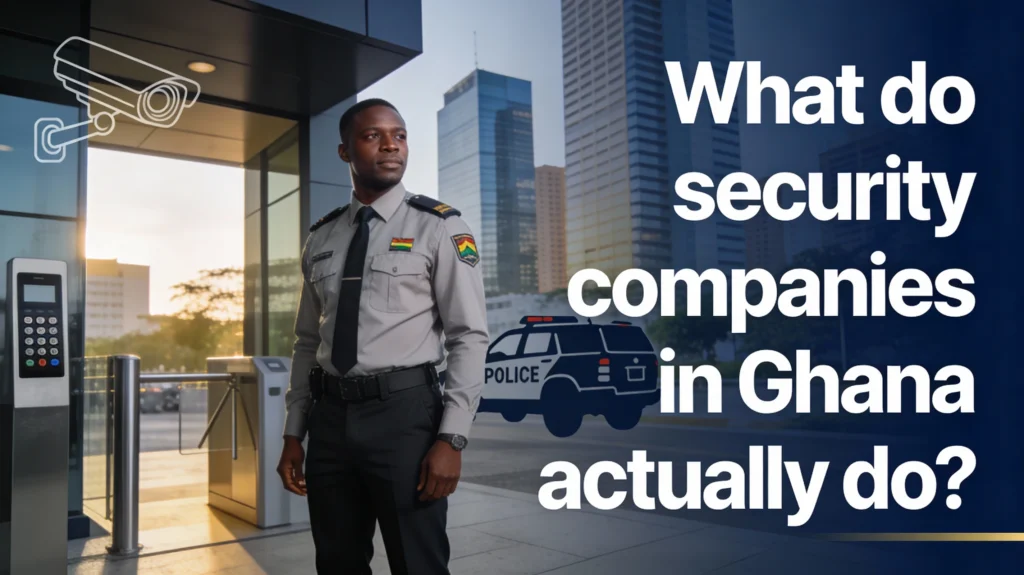
Many business owners in Ghana feel a constant, quiet fear about security. You worry about break‑ins, staff safety, and stock loss, yet you still feel exposed even after installing basic locks or cameras and hiring a single security guard service provider.
The problem is that scattered measures without a coordinated plan rarely stop determined criminals, especially in busy cities where private security companies in Ghana now carry much of the protection burden.
That anxiety grows when you hear findings from a national study using Ghana Police Service data, which recorded 5,696 robberies between 2014 and 2017—up from an average of 3 per day in 2014 to 5 per day in 2017, with many attacks targeting urban business hubs in Greater Accra and Ashanti.
But hiring a professional security company in Ghana can change that picture. In practice, they design layered security solutions for companies—from manned guarding services and access control to CCTV and alarms—so your site is watched, controlled, and ready to respond when it matters most.
Why are security companies so important in Ghana today?
Security companies are critical in Ghana today because everyday risks have grown beyond what basic locks, cameras, and an overstretched police service can manage. For many owners, business security services are no longer a nice extra; they are essential to keeping doors open, staff safe, and customers confident.
For a worried owner or manager, these numbers translate into concrete concerns.
- Ghana Statistical Service reports show that theft and burglary are among the most reported crimes across thousands of communities, and that these crimes often target everyday targets such as shops, market stalls, and small commercial premises that look just like yours.
- A study on Ghanaian SMEs found that stealing was the single most common fraud type, making up about 29% of all reported fraud cases, with fake currency and customers simply not paying for goods or services also standing out.
- A national analysis using Ghana Police Service figures showed that almost 68% of all robberies between 2014 and 2017 happened in just a few regions, including Greater Accra and Ashanti, with the Accra–Tema metro area alone responsible for more than 85% of robberies inside Greater Accra, heavily hitting business corridors, shops, and key transport routes.
- Police statistics for 2015 also noted around four armed robberies every single day, underlining a steady pattern of serious incidents that often involve traders, offices, and transport operators trying to move goods or cash.
In this reality, what do security companies in Ghana actually do for you? They turn scattered defences into a coordinated shield: manned guarding services at critical points, access control systems on gates and doors, CCTV installation and monitoring of blind spots, and structured response plans that keep people, property, and operations safer without you having to watch every corner yourself.
What core services does a security company in Ghana offer?
Most private security firms in Ghana build a mix of people, technology, and planning. Instead of buying random guards or cameras, you get a package of connected security services.
1. Manned guarding services
On‑site guards remain the backbone of physical security for many Ghanaian businesses. These general security guards provide eyes, ears, and a visible deterrent at your front line.
Typical manned guarding roles include:
- On‑site security at gates, receptions, loading bays, and sensitive areas.
- Receptionist, security guard, or front desk security welcoming visitors while checking IDs and logging entries.
- Distribution guards and warehouse security guards control vehicle access, check delivery documents, and prevent diversion.
- Retail security guards monitor shop floors, exits, and high‑value product shelves to reduce theft.
- Armed security guards for high‑risk sites such as banks or cash handling centres, where a stronger deterrent is legally allowed.
- Unarmed security guards for offices, schools, and residential estates where visibility and communication matter more than weapons.
Good guarding teams often include:
- First aid-certified guards and CPR‑certified guards who can stabilise injuries until medical help arrives.
- A mobile security officer or patrolling guard who checks multiple sites at night as part of wider 24/7 security patrol coverage.
These security guard services are not just about standing at a gate. They enforce access rules, manage visitors, and act as your first emergency response resource when something feels wrong.
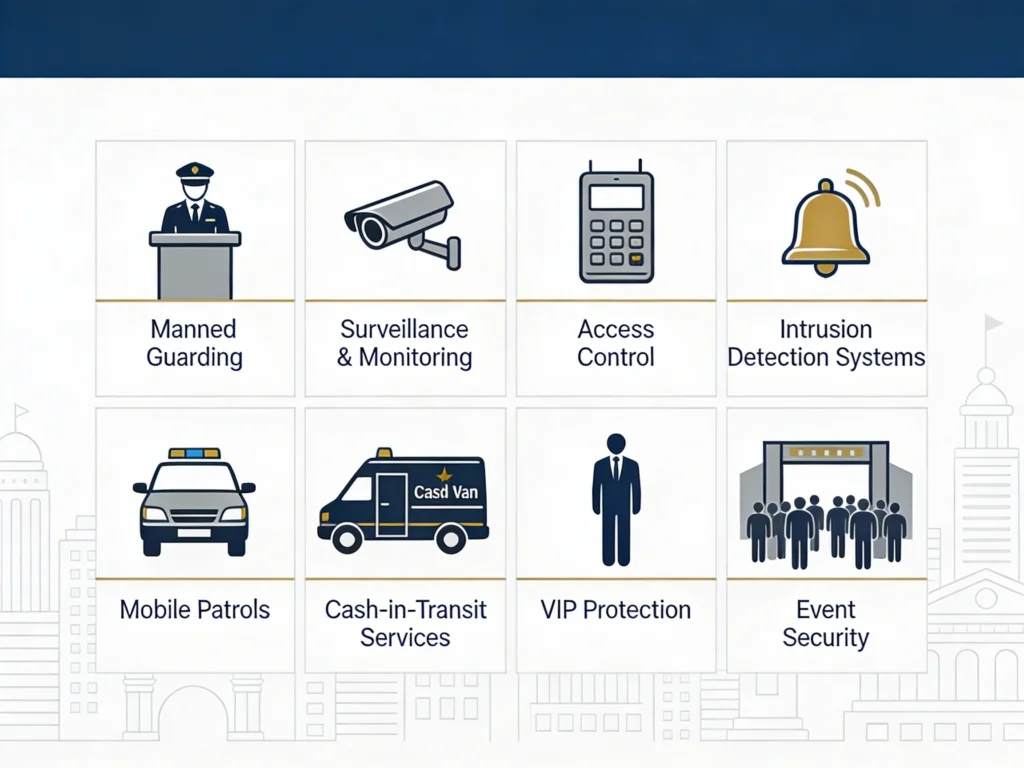
2. CCTV installation and monitoring
Technology strengthens your business protection when humans cannot monitor every corner. Many Ghanaian firms now invest in CCTV installation and monitoring to cover blind spots and support investigations.
A typical video‑based security solutions package may include:
- Fixed and PTZ security cameras covering entrances, perimeters, parking areas, and cash handling points.
- Networked surveillance systems with central CCTV monitoring in a control room or remote monitoring centre.
- Integrated video monitoring services that trigger alerts when suspicious motion or behaviour is detected.
- Linked store surveillance and mobile store detectives for retail chains, helping track patterns of organised theft.
Modern surveillance devices also support:
- Remote access for managers to review footage, especially for warehouse theft prevention and asset protection.
- Security systems integration integrates cameras, alarm systems, and access control systems into a single dashboard.
3. Access control and entry management
Many incidents start when the wrong person walks through the wrong door. That is why access control systems are a critical component of corporate and commercial security in Ghana.
Key elements often include:
- Card or fob‑based access at office doors and gates, restricting movement to authorised users.
- Visitor passes are logged at front desk security with photo capture and time‑stamped records.
- Turnstiles or boom barriers managed by a patrolling guard or operator.
- Integrated logs that connect with HR systems to support employee misconduct investigation if needed.
In a good design, these security solutions for companies:
- Separate public zones, staff zones, and high‑risk rooms.
- Reduce internal theft and support corporate espionage prevention and financial fraud prevention.
- Provide digital trails to support internal theft or fund mismanagement investigations.
4. Alarm systems and intrusion detection
Cameras show what happened. Alarm systems and intrusion detection aim to stop or limit damage while an incident unfolds. Many Ghanaian companies now pair guards with smart alarms to improve safety and protection.
Typical features include:
- Install door and window sensors at vulnerable entry points.
- Motion detectors inside key rooms and corridors.
- Panic buttons at tills, receptions, or managers’ offices are useful for retail security guards and supervisors.
- Integrated sirens plus silent alarms to a 24/7 monitoring centre.
When configured correctly, these systems support:
- Faster emergency response by guards or external responders.
- Better risk management because every alarm creates a record to review during business risk evaluation.
- Stronger protection for home security packages and residential and commercial security sites.
5. Mobile patrols and rapid response
Static guards can not be everywhere. Mobile patrol services and 24/7 security patrol units fill the gaps across larger areas, industrial zones, and multi‑site operations.
These moving teams usually provide:
- Scheduled and random drive‑bys or foot patrols around client premises.
- Quick checks on doors, locks, gates, and perimeter fencing.
- First line emergency response if alarms trigger or neighbours report suspicious activity.
For some businesses, mobile units also support:
- Escorting staff to vehicles late at night.
- Checking remote assets like fuel depots, construction yards, or telecom towers.
- Acting as visible protection services along key routes to deter opportunistic crime.
6. Cash‑in‑transit (CIT) services
If your operation handles a lot of cash, cash‑in‑transit services can be critical. Ghana’s history of armed robberies and highway risks means unsecured cash movement is a major vulnerability.
Specialised CIT teams provide:
- Secure vehicles, trained armed security guards, and armour protocols.
- Planned routes and timings to reduce predictable patterns.
- Insurance‑compliant protection services for banks, supermarkets, fuel stations, and high‑turnover retailers.
Used correctly, these services:
- Lower the chance of violent robbery.
- Reduce stress for staff handling cash daily.
- Strengthen overall corporate security and business protection strategies.
7. Executive and VIP protection
Some clients need more focused personal protection. That could include executives, high‑net‑worth individuals, diplomats, or at‑risk community leaders.
A typical personal security detail may offer:
- Route planning, secure driving, and venue checks.
- Close protection officers are trained in observation, defensive tactics, and crisis management services.
- Discreet plainclothes security officers who blend in at events or meetings.
This type of professional security service helps reduce kidnap risk, targeted attacks, or stalking, especially when combined with strong home security packages and controlled digital footprints.
8. Event and crowd security
Big gatherings can become targets for theft, violence, or crowd issues. Event security services help planners manage risk at concerts, conferences, stadiums, religious gatherings, and political events.
You can expect:
- Pre‑event evaluating security needs and site mapping.
- On‑site security teams at entrances, exits, and high‑risk areas.
- Store surveillance style monitoring near bars, cash points, and merchandise stands.
- Quick emergency response plan support, including evacuation and medical coordination.
For organisers, the right security provider means safer attendees, less property damage, and better compliance with local safety rules.
How do security companies protect your business day to day?
Numbers and labels are one thing. It also helps to see what security companies do during a normal week on your site.
1. Everyday threat detection and deterrence
Every day, security guard services and systems aim to stop small problems before they escalate.
Guards and systems usually:
- Provide a visible physical security presence at entrances, which discourages casual thieves and trouble‑makers.
- Watch live camera feeds, supporting store surveillance and video surveillance across wider areas.
- Walk patrol routes, checking dark corners, fences, and seldom‑used doors.
- Track unusual patterns like repeated loitering, failed card swipes, or suspicious deliveries.
Technology supports them with:
- Automated alerts when surveillance systems detect motion after hours.
- Access logs from access control systems that flag irregular entries.
- Integrated security systems integration dashboards that combine alarms, CCTV, and sensors.
2. Incident response and on‑site action
Even with strong risk management, incidents still happen. Here is where security companies in Ghana show their value by coordinating quick actions.
Typical responses include:
- A patrolling guard or mobile security officer rushing to the trigger point.
- Guards securing staff and customers, closing access points, and helping with safe evacuation.
- Calling emergency services and guiding responders to the right location.
- Providing immediate first aid and CPR‑certified guards support if someone is injured.
Afterwards, the security company usually:
- Files detailed incident reports, with time‑stamped notes and photo evidence.
- Helps you review weaknesses and update your emergency response plan.
- Suggests changes to security solutions such as extra lighting, more cameras, or procedural tweaks.
3. Ongoing risk management and security planning
Good corporate security services do more than react. They help you think ahead with structured corporate risk assessment and business risk evaluation.
This can involve:
- A risk assessment officer walking your site, rating threats, and suggesting controls.
- Reviewing fire exits and supporting fire watch security where legal or insurance standards demand it.
- Checking IT processes to highlight IT security risks that could leak data or enable fraud.
For complex organisations, they may also support:
- Corporate espionage prevention through access control, monitoring, and staff awareness.
- Policy writing and training for workplace conflict management and incident reporting.
- Regular security consultation meetings for continuous improvement.
What do security companies in Ghana actually do for your bottom line?
Many owners see security mainly as a cost. Done properly, security services for businesses actually protect revenue, assets, and reputation.
They reduce direct and indirect losses
The right security solutions for companies help in several ways.
- Lower theft and shrinkage through better loss prevention services, cameras, and trained retail security guards.
- Fewer damaged doors, windows, and vehicles because criminals know there is strong commercial security in place.
- Reduced exploitation of internal weaknesses thanks to internal theft investigation and tighter procedures.
Indirectly, strong corporate security also:
- Boosts staff confidence, which supports productivity and retention.
- Reassures customers and partners that your business protection is robust and professional.
- Helps with insurance discussions where strong protection services can support better terms.
They support business continuity and crisis management
When disaster strikes, every hour of downtime costs money. Many security companies in Ghana now support crisis management services and business continuity planning.
They can help you:
- Draft a realistic emergency response plan for fire, flood, or violent incidents.
- Coordinate disaster recovery steps to secure premises and assets quickly.
- Organise bad weather response teams and strike management when operations are disrupted.
- Support workplace conflict management and de‑escalation, reducing the risk of violence.
Taken together, these services mean fewer long shutdowns, faster recoveries, and better long‑term stability.
How do you choose the right security company in Ghana?
With so many options, choosing a security company can feel overwhelming. A structured approach helps you select a reliable security provider that fits your risks and budget.
First, evaluate your security needs
Before signing a contract, step back and analyse your situation.
Ask questions like:
- What type of site do you run: retail, office, warehouse, school, or healthcare?
- Have you faced burglary, fraud, vandalism, or internal theft recently?
- Do you need on‑site security, mobile patrol services, or both?
- How critical are IT security risks and data protection for your operations?
A good security company will support evaluating security needs through:
- A walk‑through security consultation with a risk assessment officer.
- A written report summarising threats, vulnerabilities, and recommended custom security plan options.
Next, compare key factors in security services
When comparing security services, do not just look at price. Focus on competence, compliance, and fit.
Check for:
- Proper registration and licensing are required since regulated private security companies in Ghana must meet specific standards.
- Guard training programmes that cover law, communication, first aid, certified guards, and CPR‑certified guards.
- Clear supervision and reporting structures for security guard services and patrols.
- Experience in your sector, such as healthcare security, construction site security, oil and gas industry security, or camp security services.
Ask for professional risk consultation
If your operation is complex, a professional risk consultation can save you from costly mistakes.
You should strongly consider this if you:
- Handle high‑value goods, fuel, or cash that attract organised crime.
- Operate multiple locations with shared security services and central policies.
- Worry about insider threats, requiring corporate private investigator skills and fraud detection.
- Face legal or regulatory pressure to prove strong safety and protection measures.
In these scenarios, a structured security planning and implementation project will usually pay for itself in reduced losses and fewer crises.
Read more: What Do IT Companies in Accra Charge for Managed IT Support?
Real Ghana‑based case studies: how security companies make a difference
To make this more concrete, it helps to see what security companies actually do in everyday Ghanaian contexts. These short case‑style examples draw from real research and sector data.
Case study 1: Urban households and commercial sites turning to private security
Researchers surveyed 2,745 households across Accra, Kumasi, Sekondi‑Takoradi, and Tamale to understand crime and reliance on private security.
Key insights you can relate to:
- As reported crime increased over several decades, more homes, banks, hospitals, schools, markets, and transport terminals started using private security firms.
- Households and institutions hired guards for residential and commercial security, installed surveillance systems, and added fences or gates to feel safer.
- Many middle‑class residents now treat private security services—like guards, cameras, and alarms—as basic household utilities instead of luxuries.
What does this show a business owner? Even regular families see value in structured security solutions, so ignoring these needs at a commercial level is a serious risk.
Case study 2: Growth of private security because of limited police capacity
A labour‑focused study on working conditions for security staff explored why security companies in Ghana have grown so fast.
The report found that:
- Increasing crime, including armed robberies, conflicts, and organised offences, has stretched the Ghana Police Service beyond comfortable limits.
- Police records themselves recognise gaps in manpower and capability to protect all lives and property across the country.
- This “huge security gap” allowed private security companies in Ghana to expand rapidly, with hundreds of firms and hundreds of thousands of workers taking on protection services once handled by state forces alone.
For you, this means outsourcing security services is not a luxury trend. It is a structural response to realities that no single business can change on its own.
Read more: How IT Companies in Ghana Help Small Businesses Go Digital
Conclusion: ready to partner with the right security company?
In Ghana’s current landscape, what do security companies actually do? They fill the space between everyday risk and your ability to sleep at night, combining guards, technology, and planning to protect people, property, and reputation. By investing in the right mix of security services for businesses, you move from hoping nothing bad happens to actively managing your business protection and risk management with professionals who do this every day.
If you are ready to take the next step, partner with WebSys Technology to build secure, high‑performing digital systems and IT infrastructure that support your broader security solutions for companies, from reliable networks to robust, business‑ready platforms that help you operate safely and confidently online.
GET IN TOUCH
FAQs
In Ghana, security companies offer manned guarding, CCTV installation and monitoring, access control, alarm monitoring and response, mobile patrols, cash‑in‑transit, executive protection, and security consulting or risk management for homes, offices, shops, banks, and industrial sites.
A security company protects people and property by providing trained guards, controlling access, monitoring CCTV and alarms, responding to incidents, escorting cash or VIPs, and advising clients on risks, procedures, and emergency plans that reduce crime opportunities.
Recent pay data shows many security guards in Ghana earn roughly GHS 800–1,500 per month at entry level, rising to about GHS 1,500–2,500 or more with experience, location, contract type, and special skills.
Ghana is generally stable but faces a high crime threat, with robberies, theft, and burglary affecting homes and businesses, and hundreds of armed robberies reported each year, especially in major urban and commercial areas like Accra and Kumasi.