

The Cyber Security Authority reported that Ghana lost GH¢19 million to cybercrime in just nine months of 2025, representing a troubling 17% surge from the previous year. Even more alarming, 2,008 cyber incidents struck Ghanaian businesses in the first half of 2025 alone. These escalating cyber threats force business owners into a critical dilemma today.
Should you manage cybersecurity internally using DIY cybersecurity tools and self-taught strategies? Or does hiring professional IT services make better financial and operational sense for growth?
Many entrepreneurs worry that self-managed IT security might expose vulnerabilities they can’t detect independently. Others question whether professional services justify their ongoing costs for smaller operations.
DIY approaches offer budget-friendly control but demand continuous learning and time investment. Managed IT security services provide expert protection but require trusting external partners completely. Understanding both strategies’ strengths, limitations, and practical applications helps you choose the right path forward.
GET IN TOUCH
Get Customized IT Security for Your Business Now!
What Is DIY Cyber Security?
DIY cybersecurity refers to self-managed IT security approaches where businesses handle their own protection. Small businesses and startups often choose this route to minimize upfront costs. The approach typically involves installing antivirus software like Norton Antivirus or Kaspersky on company devices.
Business owners implement basic firewall management and establish secure password policies without external assistance. Personal cybersecurity measures include regular software updates, VPN solutions for remote work, and data backup strategies.
Home security solutions for businesses require some technical knowledge to implement effectively. You’ll need to understand threat detection basics and configure encryption software properly. Many affordable cybersecurity solutions exist for those willing to learn and manage systems themselves.
However, this approach demands continuous attention and time away from core business operations.
What Are Professional IT Services?
Professional IT services deliver comprehensive protection through managed IT security services from certified experts. These IT service providers offer 24/7 security monitoring, threat detection and response, and incident response planning.
Cybersecurity consulting firms employ IT security experts who hold certifications like CISSP and CEH. They implement enterprise-level cybersecurity solutions that adapt to evolving threats in real-time.
Managed IT services include continuous security monitoring using advanced intrusion detection systems and threat intelligence. Professional providers handle everything from multi-factor authentication setup to GDPR compliance and data protection requirements.
The comprehensive approach covers firewall management, VPN solutions, ransomware protection, and regular security audits. These cybersecurity experts stay updated on Ghana’s cybersecurity landscape and emerging threats constantly.
Read more: 5 Critical Signs Your Ghanaian Business Needs Network Security Companies’ Support
DIY vs Professional IT Services: A Detailed Comparison for Ghanaian Businesses
Choosing between DIY and professional approaches requires understanding how each impacts your operations. The decision affects your budget, security effectiveness, and long-term business sustainability significantly.
| Aspect | DIY Cybersecurity | Professional IT Services |
| Initial Cost | Low upfront investment | Higher initial setup fees |
| Ongoing Expenses | Software licenses only | Monthly service contracts |
| Expertise Level | Limited technical knowledge | Certified security professionals |
| Response Time | Delayed manual intervention | Immediate 24/7 threat response |
| Coverage Scope | Basic virus protection | Comprehensive security framework |
| Scalability | Manual upgrades required | Automatic scaling with growth |
| Compliance Management | Self-monitored regulations | Automated regulatory adherence |
| Threat Detection | Reactive after incidents | Proactive threat prevention strategies |
Ghana’s cybersecurity challenges have intensified dramatically across all business sectors this year. The Cyber Security Authority reported 1,200 cases of online fraud from January to September 2025, according to official reports.
Cyberbullying incidents reached 738 cases, while online blackmail accounted for 507 reported cases. These phishing scams and malware attacks target businesses of every size throughout Ghana.
Cost-effective cybersecurity doesn’t always mean choosing the cheapest option available for protection. You must weigh potential losses against preventive investment when making security decisions.
Small business cybersecurity needs differ vastly from enterprise requirements in scope and complexity. The IT industry growth in Ghana has brought sophisticated cyber attack prevention tools within reach.
Read more: Why Growing Businesses in Accra Partner with Network Security Companies in Ghana
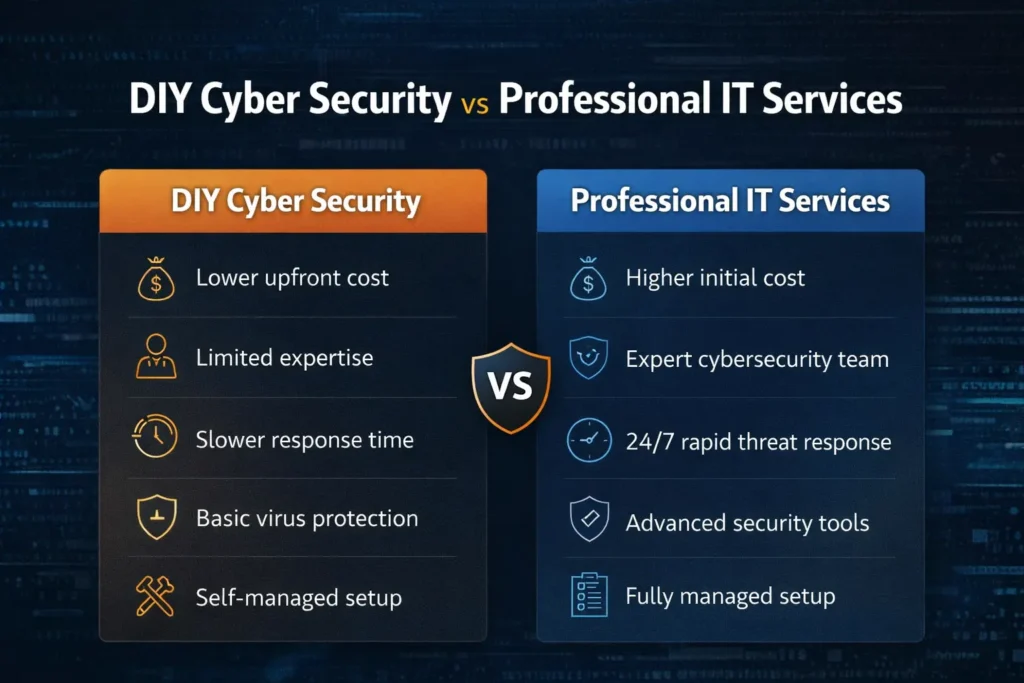
The Hidden Risks of DIY Cyber Security: What You Need to Know
Many businesses underestimate the vulnerabilities in DIY cybersecurity solutions until disaster strikes unexpectedly. Self-managed approaches carry significant risks that aren’t immediately obvious to untrained eyes.
Knowledge gaps create dangerous security holes in your digital infrastructure over time:
- Missing critical security patches leaves systems exposed to known exploits daily
- Improper configuration of virus protection software reduces its effectiveness against threats
- Lack of understanding about data breaches and attack vectors increases vulnerability
- Insufficient knowledge about the Cybersecurity Act, 2020, leads to compliance violations
Delayed threat detection allows attackers to operate undetected within your systems for weeks. Without continuous security monitoring, ransomware protection becomes reactive rather than preventive in nature. Ghana recorded 4,753 DDoS attacks, making it the country with the most attacks in West Africa per NETSCOUT’s report. DIY measures simply can’t withstand this scale of coordinated digital assault effectively.
The risks of relying on in-house cybersecurity teams without proper training include:
- Inadequate incident response planning when breaches occur without established protocols
- False confidence from basic antivirus software while sophisticated threats slip through undetected
- Time is diverted from revenue-generating activities to manage security issues constantly
- Inability to keep pace with emerging cybersecurity threats in Ghana evolving daily
Online data privacy concerns escalate when businesses lack proper encryption software and secure configurations. The Data Protection Act in Ghana mandates specific protections that DIY approaches often miss. Your attack surface expands as business operations grow without professional security architecture planning.
Read more: Top 9 Network Security Companies in Ghana in 2026
Top Benefits of Professional IT Services: Why Experts Are Worth the Investment
Professional cybersecurity delivers value that extends far beyond basic threat protection for businesses. The investment pays dividends through prevented losses, maintained operations, and regulatory compliance assurance.
Advanced threat intelligence capabilities distinguish professional services from basic DIY approaches significantly:
- Real-time monitoring detects suspicious activities before they escalate into full breaches
- AI-driven threat detection identifies malware attacks using behavioral analysis and pattern recognition
- Proactive threat prevention strategies stop attacks before they compromise your critical systems
- Access to global threat intelligence networks provides early warnings about new vulnerabilities
Ghana’s financial sector experienced nearly GH¢10 million in cyber-related fraud losses during 2024 according to Bank of Ghana reports. Professional IT security experts help you avoid becoming part of these statistics. The ROI of professional cybersecurity services becomes clear when comparing prevention costs to breach recovery.
Certified expertise ensures your business benefits from the latest security knowledge continuously:
- IT security experts hold credentials like Certified Information Systems Security Professional certifications
- Regular training keeps professionals updated on cybersecurity trends in Ghana and globally
- Specialized knowledge in areas like penetration testing, forensics, and incident response planning
- Understanding of local regulations including cybersecurity standards in Ghana and compliance requirements
Business continuity remains intact even during security incidents with professional support teams responding. Managed IT services minimize downtime through rapid incident response and established recovery protocols. Your team focuses on core business while experts handle complex security operations behind the scenes. This division of labor improves overall productivity and reduces stress on internal staff.
Professional providers implement a comprehensive cybersecurity framework aligned with international best practices. They establish robust data backup strategies, multi-factor authentication, and regular software updates automatically. IT risk management becomes systematic rather than ad-hoc under expert guidance and oversight.
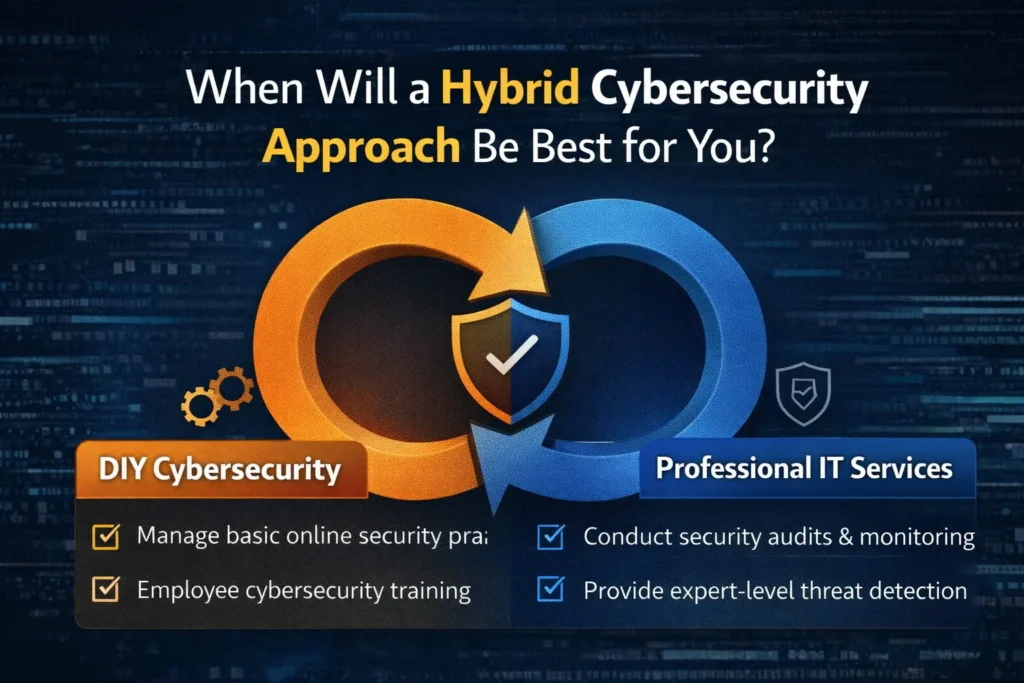
When Will a Hybrid Cybersecurity Approach Be Best for You?
Combining DIY measures with professional oversight creates a practical middle ground for many organizations. This blended security model offers cost savings while maintaining essential expert protection layers.
A hybrid approach works well when your business has some technical capability internally. You might handle basic online security best practices, such as employee training in cybersecurity awareness. Meanwhile, professionals manage complex tasks like penetration testing and continuous security monitoring systems.
Effective hybrid implementations include these common configurations:
- Internal teams manage password policies while experts conduct quarterly security audits
- Staff handle routine software updates, and professionals provide incident response planning
- Your IT department runs antivirus software while consultants perform threat detection oversight
- Employees complete cybersecurity awareness programs while specialists monitor network traffic patterns
Medium-sized businesses transitioning from basic protection to enterprise-level cybersecurity solutions benefit most. The approach allows gradual scaling as budgets and threats evolve over time. You maintain some control while gaining peace of mind from professional backup.
Budgeting for IT security becomes more manageable through phased, strategic hybrid implementations. Start with critical systems under professional management and expand coverage as resources allow. This cost comparison: DIY vs professional services often favors hybrid models for growing companies. Local IT support services in Ghana increasingly offer flexible packages supporting this approach.
How to Hire the Right Professional IT Service Provider for Your Business
Selecting the right cybersecurity partner requires careful evaluation beyond just comparing price quotes. The wrong choice could leave you vulnerable despite paying for supposed protection services.
Verify credentials and certifications before committing to any IT service provider relationship:
- Look for ISO 27001 certification demonstrating systematic security management practices
- Confirm staff hold relevant certifications like CompTIA Security+ or Certified Ethical Hacker
- Check memberships in professional organizations and adherence to cybersecurity standards in Ghana
- Review case studies showing successful implementations for businesses similar to yours
Local expertise matters significantly when navigating Ghana’s unique cybersecurity landscape and regulations:
- The provider should thoroughly understand the requirements under the Cybersecurity Act, 2020 thoroughly
- Familiarity with Ghana National Cyber Security Centre guidelines and reporting procedures
- Relationships with the Ghana Police Cyber Crime Unit for incident escalation when necessary
- Knowledge of National Communications Authority requirements for telecommunications and internet businesses
Evaluate their service portfolio to ensure comprehensive coverage matching your specific needs:
- 24/7 security operations center providing continuous security monitoring and immediate response
- Managed detection and response services using advanced tools from providers like Fortinet
- Regular vulnerability assessments and penetration testing to identify weaknesses proactively
- Compliance management support for GDPR compliance and local data protection laws
Ask potential providers specific questions about their threat detection and response capabilities directly. How quickly do they respond to incidents outside business hours typically? What encryption software and intrusion detection systems do they deploy for clients? Request detailed service level agreements specifying response times and uptime guarantees clearly.
Red flags to watch for during provider evaluation include:
- Vague answers about their security monitoring processes and tools used daily
- Reluctance to provide client references or detailed case studies from similar businesses
- Pressure tactics are pushing immediate commitments without proper evaluation periods
- Pricing that seems too good compared to market rates for comparable services
WebSys Technology has established itself among IT services for businesses in Ghana through proven results. Their team understands the local market while applying international best practices effectively. Consider scheduling consultations with multiple providers to compare approaches and find your best fit.
Conclusion
DIY cybersecurity offers budget-friendly entry points but exposes businesses to substantial risks over time. Professional IT services deliver comprehensive protection, expert knowledge, and continuous monitoring worth the investment. The hybrid approach provides a viable middle path for businesses with some capabilities. Your decision should factor in business size, available budget, risk tolerance, and industry requirements.
Ghana’s increasing cybercrime rates demand robust responses as digital threats evolve and multiply. The 52% increase in cyber incidents during 2025’s first half signals escalating dangers. Protecting your business through a proper cybersecurity strategy isn’t optional anymore in today’s landscape. Your security investment today safeguards your business operations, customer trust, and future growth.
If you’re exploring managed IT security services tailored to Ghanaian businesses specifically, WebSys Technology delivers comprehensive solutions. Their expertise spans the full spectrum from basic protection to enterprise-level implementations.
Contact WebSys Technology for a consultation assessing your unique security needs today.
GET IN TOUCH