

Ghana’s networks face constant pressure from cyber threats in Ghana, especially as businesses digitise faster. Telecoms and banks feel the heat first because attackers chase uptime and money.
Ghana recorded 4,753 DDoS attacks in the first half of 2024, the highest level in West Africa. That kind of disruption can knock services offline, delay payments, and trigger reputational damage.
Reported cybercrime losses exceeded GH¢19 million between January and mid‑2025, underscoring how costly weak defenses can be. Under that stress, many business owners end up asking, “What is the most common network security vulnerability?” and “How do professionals fix network security vulnerabilities in Ghana?”
Here are the quick answers: Unpatched software ranks as the most common network security vulnerability in Ghana, accounting for 29.17% of detections, ahead of RDP brute-force attacks.
Network security companies counter smartly with thorough scans, robust hardening, and hands-on team training. This guide lays bare types of network vulnerabilities, local pitfalls, and battle-tested fixes. Arm yourself to protect operations today.
GET IN TOUCH
Strengthen your network against evolving cyber threats.
What Are Network Vulnerabilities?
Network vulnerabilities mean weak spots that attackers use to sneak in. These security flaws arise from tech gaps, human slips, or poor setups. In Ghana, rapid growth in the country’s IT infrastructure widens these cracks further. Why do they persist? Outdated tools and low awareness play big roles.
Consider these common types that plague networks:
- Weak passwords & authentication: Factory default settings” invite brute-force tries, especialattacksrouters in SMEs.
- Unpatched systems & outdated software: Legacy servers skip fixes, fueling ransomware.
- Misconfigured devices: Exposed ports invite scanners to probe deeper into your infrastructure.
- Insecure networks & wireless: Public Wi-Fi hotspots leak data in busy Accra cafes, lacking encryption.
- IoT and remote devices: Unsecured cameras join networks blindly, creating backdoors for insider threats.
- API & cloud misconfiguration: Open buckets spill sensitive files to prying eyes online.
- Human/social engineering risks: Phishing attacks trick staff, sparking 36% of fraud cases naturally.
Each flaw connects, demanding layered fixes fast.
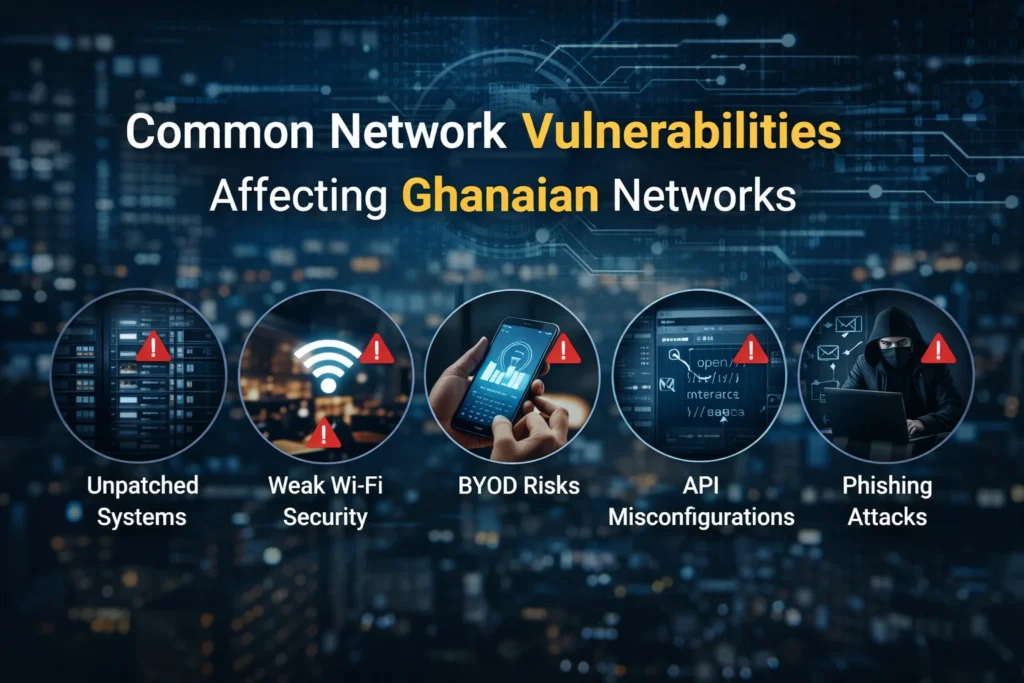
Common Network Vulnerabilities Affecting Ghanaian Networks
Ghanaian networks grapple with tailored threats from explosive mobile growth and spotty awareness. Cyber threats in Ghana exploit Ghana’s IT infrastructure, hitting SMEs and public spots hardest as compliance lags.
Let’s examine each in detail:
- Mobile device and BYOD risks (very common in Ghanaian SMEs): Employees mix personal phones with work data freely, blurring lines dangerously. Malware slips in via apps or links, especially since 70% of Ghana’s workforce uses mobiles for business. Endpoint protection often lacks, letting zero-day exploits spread unchecked. Disruptions follow—lost files, leaked client info. Firms lose hours recovering, while attackers pivot inside. Simple two-factor authentication (2FA) curbs this, yet adoption trails.
- Phishing & social engineering as a key threat due to awareness gaps: Clever emails pose as banks or NCA alerts, tricking clicks on bad links. This drives 36% of fraud and 25% of incidents in H1 2025. Ghana’s cybersecurity education in Ghana lags, making staff prime marks. Victims hand over creds willingly, sparking data breaches. Training flips the script, teaching spot-the-fake drills effectively.
- Legacy systems & unpatched IT infrastructure: Old servers run Windows relics, ignoring patches for months. Health sector maturity stays low. Unpatched software welcomes ransomware, like the bank hit encrypting 100TB. Costs soar beyond GH¢19M yearly. Automated patch management schedules fix this cycle reliably.
- Wireless vulnerabilities in public internet hubs: Accra and Kumasi cafes offer open Wi-Fi ripe for man-in-the-middle (MitM) attacks. Snoopers grab logins mid-session without secure Wi-Fi networks like WPA2. Tourists and traders fall first, leaking corporate secrets. VPN (Virtual Private Network) shields traffic seamlessly.
- Compliance gaps given local regulation environment (e.g., NCA cybersecurity initiatives): NCA pushes directives, but SMEs skip audits amid growth pressures. Gaps invite fines and probes under Ghana’s cybersecurity regulations. Network intrusions thrive unchecked. ISO/IEC 27001 alignment bridges this, proving diligence to regulators.
These vulnerabilities interconnect, amplifying damage—DDoS alone tallied 152 telecom hits at 36.86 Gbps peaks in 2025. Pros target them holistically for real wins.
Read more: Top 9 Network Security Companies in Ghana in 2026
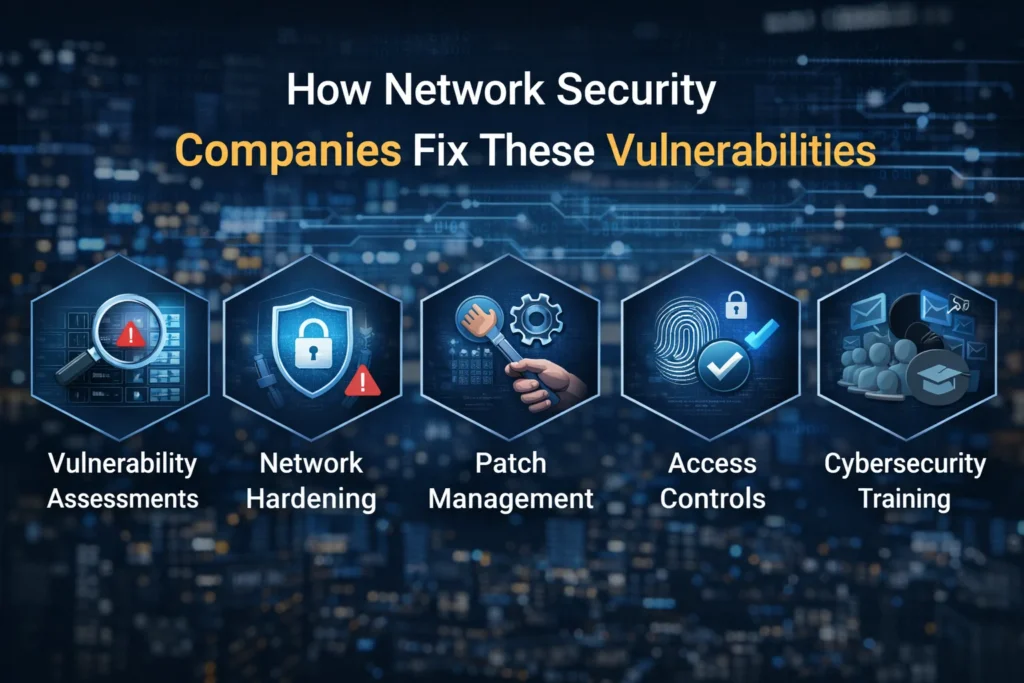
How Network Security Companies Fix These Vulnerabilities
Network security companies in Ghana deliver targeted fixes that blend global expertise with local realities. They prioritise threats through data-driven approaches, slashing breach risks amid surging incidents. Continuous monitoring and tailored strategies keep businesses resilient.
Now explore their core tactics in detail:
1. Comprehensive Vulnerability Assessments and Scanning
Experts launch automated network scanners alongside manual probes to uncover hidden flaws. Penetration testing tools simulate real hacks, mimicking SQL injection or XSS. Ghana teams prioritise via CVSS scores, then roadmap remediations. Cybivalue excels in wireless and API audits, spotting weak encryption early. Remediation tracking ensures patches stick, vital against 29% RDP threats.
2. Network Hardening: Strengthening Your Digital Defenses
Robust firewalls block unauthorised flows, paired with IDS for alerts and IPS for auto-blocks. Secure routing kills rogue protocols stone dead. NexisOps pushes zero-trust to verify every access. This thwarts DDoS attacks averaging 34 minutes, with multivector peaks at 36 Gbps. VPN and AES encryption seal wireless gaps in public hubs.
3. Securing Access: Authentication and Access Control
Patch management automates updates, closing unpatched software doors weekly. Two-factor authentication (2FA) and RBAC enforce least privilege smartly. IPMC Ghana handles the lifecycle for endpoints, dodging BYOD pitfalls. Scheduled scans align with Ghana cybersecurity regulations.
4. Endpoint Security: Protecting Devices and Networks
Endpoint protection platforms guard mobiles and IoT from malware. Secure telemetry tracks remote traffic anomalies. Factosecure assesses networks and cloud, fixing misconfigs before leaks. Vital for Ghana’s IoT boom in SMEs.
5. Cybersecurity Training and Awareness for Employees
Hands-on workshops drill phishing recognition and safe habits. Slamm Technologies teaches firewalls and IDS via ethical hacking. Tailored for Ghana’s awareness gaps, reducing 36% fraud risks.
6. Cybersecurity Awareness & Training
Ongoing simulations build instincts against social engineering. SIEM integrates logs for proactive hunts. NexisOps offers 24/7 SOC, blending threat intel with response. Complianwith to ISO 27001 boost maturity.
| Fix Area | Key Tools/Standards | Ghana Benefit |
| Assessments | Nessus, penetration testing | API/Wi-Fi fixes |
| Hardening | Firewalls, IPS | DDoS blocks |
| Access | Patch management, 2FA | Fraud cuts |
These layered defenses deliver ROI, as seen in banks evading GH¢23M losses. Pros turn vulnerabilities into strengths seamlessly.
Read more: Why Growing Businesses in Accra Partner with Network Security Companies in Ghana
Real-World Examples: Successful Network Security in Ghana
Real fixes shine brightest in Ghana’s battle-tested cases. Network security companies prove their worth by slashing damages and restoring order swiftly.
- Take a major financial institution hit by ransomware in late 2025. Attackers encrypted 100 terabytes and siphoned $120,000 during INTERPOL’s Operation Sentinel. Ghanaian experts dissected the malware strain swiftly. They crafted a custom decryption tool, reclaiming nearly 30 terabytes of critical data. Authorities arrested the suspects through forensic leads. This quick pivot minimised downtime and losses.
- Telecom giants faced 152 DDoS barrages early in 2025, with wired carriers absorbing 94. Peaks hit 36.86 Gbps using DNS floods and SYN assaults. Firms deployed IDS/IPS and threat intel platforms. Response times dropped attacks to under 35 minutes on average. Services stayed live, dodging revenue dips.
- A leading bank embraced Managed Detection and Response amid regulatory heat. They installed SIEM sensors for round-the-clock vigilance. Penetration tests closed BYOD gaps, while training curbed phishing slips. Compliance reports flowed seamlessly, proving resilience in audits.
These cases highlight ROI starkly. National cyber losses touched GH¢23 million in 2024, but proactive steps averted far worse locally. Vulnerability scanning and hardening pay dividends fast.
Best Network Security Practices Checklist
Smart habits build ironclad defenses against lurking threats. You fortify networks through consistent routines that layer protection deeply. Ghana businesses thrive by weaving these into daily operations smoothly.
Adopt these proven steps to stay ahead of breaches:
- Regular patching & updates: Scan weekly and deploy fixes promptly to seal software gaps before exploits strike.
- Zero-trust principles: Verify every user and device relentlessly, assuming threats hide inside your perimeter always.
- Multi-layered defense: Combine firewalls, IDS, and endpoint tools for overlapping shields that catch what one misses.
- Incident response planning: Map clear playbooks with roles assigned, so teams react swiftly without panic.
- 24/7 monitoring & threat intel: Use SIEM dashboards to spot anomalies early and tap fresh feeds for emerging risks.
- Regulatory compliance: Align setups with local rules through audits, ensuring data flows stay legal and secure.
Tools like VPNs and encryption protocols amplify these efforts naturally. Checklists turn theory into practice fast.
Read more: ROI of Hiring Network Security Companies in Ghana: Real Business Impact
The Role of Ghana’s Government and Cybersecurity Regulations
Government frameworks anchor Ghana’s cybersecurity fight effectively. The Ghana National Cybersecurity Authority (CSA) leads with policies that boost maturity across sectors. NCA enforces telecom safeguards amid digital surges.
Key players and rules shape robust defenses. Here’s how they drive protection:
- Ghana National Cybersecurity Authority (CSA): Oversees audits, incident response, and national strategies that guide businesses wisely.
- NCA (National Communications Authority): Mandates secure networks, data protection, and compliance for telecoms and ISPs nationwide.
- Ghana cybersecurity regulations: Draw from global ISO/IEC 27001 standards, enforcing encryption and breach reporting strictly.
- Public-private partnerships: INTERPOL collaborations recover assets and nab criminals, as seen in recent ops.
National Cybersecurity Policy stresses education and infrastructure resilience. These efforts bridge gaps in Ghana’s IT infrastructure, empowering firms against threats. Local rules align with PCI-DSS for finance, ensuring holistic coverage.
Conclusion: Proactive Network Security is Key to Protecting Ghanaian Businesses
Common network vulnerabilities in Ghana strike without warning, from DDoS attacks to phishing traps. Businesses lose millions yearly as cyber threats in Ghana exploit unpatched software and weak links.
You’ve seen the risks up close—legacy gaps, BYOD chaos, and compliance slips. Network security companies counter brilliantly through scans, hardening, and training that deliver real wins. Cases prove it: Banks reclaim data, telecoms block barrages.
Checklists and government rules like CSA policies arm you further. Don’t gamble with your operations amid booming digitisation. Proactive steps turn weaknesses into strengths overnight.
Partner with WebSys Technology today for tailored assessments that fit Ghana’s landscape perfectly. Visit websystechnology.com now—secure your edge before threats escalate. Your future depends on acting smartly.
GET IN TOUCH
Request a free network security audit today.
FAQs
Unpatched software tops the list as the most common network security vulnerability worldwide and in Ghana. Outdated systems miss critical fixes, letting hackers slip in through known exploits like RDP brute-force attacks that claim 29% of threats. Legacy setups in SMEs leave doors wide open daily.
Cybersecurity threats in Ghana include rampant DDoS attacks, ransomware, and phishing that dominate local networks. Telecoms faced 152 DDoS hits early 2025, peaking at 36.86 Gbps, while fraud fuels 36% of 2,008 incidents costing GH¢19 million.
Security issues in Ghana center on network vulnerabilities like unpatched IT, weak wireless encryption, and BYOD risks in SMEs. Legacy infrastructure in health sectors lags maturity, sparking data breaches amid 4,753 DDoS attacks—the worst in West Africa.