
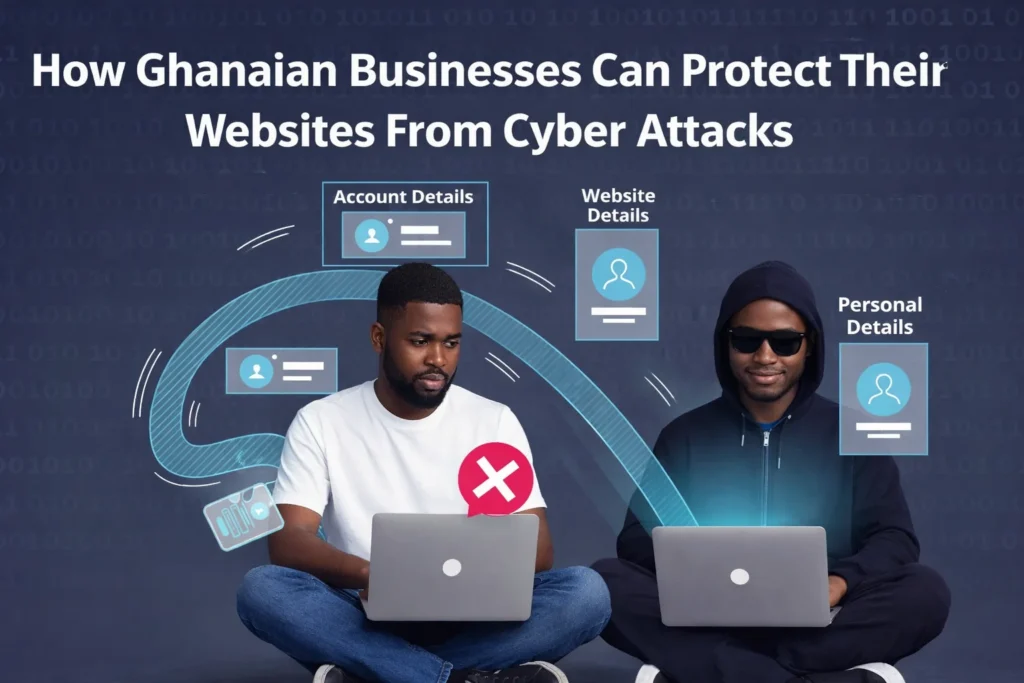
Ghanaian businesses rush online, but cyber threats lurk everywhere, from Accra shops to Kumasi services. Hackers steal data, crash sites, and cause millions in costs yearly. You don’t need to fear them.
Protect your website from hackers by installing SSL certificates, enforcing strong password policies, enabling multi-factor authentication, keeping software updated, adding a web application firewall, choosing secure hosting, running regular backups, monitoring activity, conducting security scans, and training employees on cybersecurity.
These steps answer how you shield your site effectively. The Cyber Security Authority noted over 2,000 incidents in early 2025, with SMEs hit hardest, with GHS 15 million already lost. You face phishing scams, ransomware, and DDoS daily in Ghana’s digital boom.
Act now with these website security best practices to safeguard revenue and trust. Your customers expect safe transactions, so build defenses that work locally. Follow through, and hackers bounce off harmlessly while your business grows stronger.
Why Cyber Attacks Are Increasing in Ghana
Ghana’s digital boom fuels a sharp rise in cyber attacks on businesses. You embrace online sales and services, yet hackers follow close behind. Weak defenses and rapid growth create perfect storms for trouble.
- Everyone rushes online without strong website security. SMEs lack training, so phishing scams slip through easily every day.
- Fraudsters chase profits from your fintech payments and e-commerce carts. They know Ghana’s economy is growing fast, drawing in global predators too.
- Mobile users account for over 68% and click on risky links on their phones without thinking twice. This amplifies threats across Accra and Kumasi.
- Poor infrastructure, such as power outages, exposes servers to crashes and exploits. You face downtime that hackers love to target.
- Limited reporting hides the full scale, encouraging attackers who operate with little fear. Local and international crews team up for bigger hauls.
- Economic pressures push some Ghanaians into scams themselves. They exploit trust in familiar names, such as banks or government sites.
You see attacks climb because opportunity knocks louder than ever. Strengthen your setup now. Hackers thrive on neglect, but you control the locks. Build cybersecurity for Ghanaian businesses before they strike at your door.
Read more: Why Website Security Is Critical for Online Businesses
Most Common Cyber Attacks Targeting Business Websites
Phishing, ransomware, DDoS, and web exploits most often target business websites in Ghana. You spot these threats to shield your operations effectively. They cost SMEs millions of dollars annually due to data theft and downtime.
- Phishing and BEC scams top the list, accounting for 36% of cases. Fraudsters mimic trusted brands to snag logins or funds.
- Ransomware locks files, accounting for 1/3 of org attacks and 43% malware share. Recovery demands tough choices fast.
- DDoS attacks overwhelm servers; Ghana saw 4,753 in early 2024 alone. Sales halt during peak hours.
- SQL injection exploits forms; 18% web attacks use vulnerabilities. E-commerce loses cards and trust quickly.
- Over half target finance/govt, but SMEs suffer silently from underreporting.
| Attack | Ghana Stat | Impact Example |
| Phishing | 36% incidents | GHS 8-12M bank losses |
| Ransomware | 43% malware | 100TB encrypted |
| DDoS | 4,753 attacks | Firm outages |
| SQLi | 18% web vulns | Card data theft |
Warning Signs Your Website May Be Under Attack
You catch cyber threats early by watching for odd changes on your site. Quick action saves your business from major losses. Stay sharp to spot trouble before it spreads.
- Traffic plunges or surges without reason, hinting at DDoS attacks. Check Google Analytics for midnight spikes from strange locations.
- Your site crawls with new pop-ups or redirects you never coded. Malware infections often hide behind these sneaky additions.
- Customers complain about failed logins or altered prices. Hackers tweak content quietly while you sleep.
- Server logs show dozens of failed login tries from abroad. Brute force attacks pound weak passwords around the clock.
- Error pages multiply fast, or CPU usage skyrockets. Overloaded servers signal deeper vulnerabilities in the website.
- For example, an Accra boutique owner, Amna, notices checkout buttons vanish after a plugin update. (This clarifies spotting code tampering; not a real case.)
You ignore these at your peril. Set up alerts now. Simple monitoring tools catch issues before customers flee. Protect your revenue with vigilance. Act fast, and hackers find no foothold.
10 Powerful Ways Ghanaian Businesses Can Protect Their Websites
You gain control over cyber threats with these ten proven steps tailored for Ghanaian SMEs. Each one targets real risks like phishing and DDoS that hit local sites hard. Start small, scale up, and watch your business website security transform.
1. Install an SSL Certificate
Lock down data flowing to and from your site with an SSL certificate. Customers enter card details securely over HTTPS, preventing interception on public Wi-Fi. Ghana e-commerce stores dodged skimming attacks this way, saving thousands in losses. You pick affordable managed options that auto-renew—no hassle. Browsers flag non-SSL sites as “not secure,” driving visitors away fast. Install one today through local providers. Your trust skyrockets as that padlock icon reassures shoppers in Accra markets or Kumasi online stalls.
2. Use Strong Password Policies
Demand strong passwords to block brute-force attacks that crack weak ones overnight. Mix 12+ characters with numbers, symbols, and cases—no birthdays or “123456” allowed. Change them quarterly, never reuse across tools. Ghana banks fell to BEC scams from lazy creds, losing millions. You enforce team rules via managers like LastPass. Staff adopts habits easily, cutting login risks by 80%. Simple policy, massive shield for your admin panels.
3. Enable Multi-Factor Authentication
Layer on extra checks beyond passwords with multi-factor authentication (MFA). A phone code or app tap stops thieves even if they guess your login. Exec phishing drained GHS 4.2 million locally without this barrier. You flip it on for WordPress, hosting dashboards, and email in minutes. Google Authenticator works offline, perfect for spotty networks in Tema. Train your team; resistance fades once they see safety gains. Hackers rage quit at the second hurdle every time.
4. Keep Website Software Updated
Patch holes fast by updating CMS, plugins, and themes regularly. Old versions invite SQL injection through known flaws, as seen in fintech breaches here. Auto-updates handle most work, but test on staging sites first. A Kumasi shop owner, hypothetically, skips a Joomla exploit after timely fixes—this example shows patching power, not a true story. You schedule monthly reviews with tools like WP-CLI. Stay current, and zero-day threats bounce off harmlessly. Neglect invites disaster; diligence keeps you running smoothly.
5. Install a Web Application Firewall
Deploy a web application firewall (WAF) to filter malicious traffic before it reaches your application. It zaps SQLi and XSS attempts automatically, no coding needed. Cloudflare’s free tier blocks DDoS floods that crippled ICT firms. You tweak rules for your e-commerce flow, watching logs for tweaks. Sucuri adds malware cleanup too. Local spikes during sales seasons? WAF handles them effortlessly. Your site breathes easy under siege.
6. Use Secure Hosting
Pick hosting with DDoS protection and malware scans baked in. Cheap shared plans expose you to bad neighbors; premium ones isolate cleanly. Ghana CERT-compliant providers guarantee 99.9% uptime. You avoid outages that cost sales during peak hours. Immutable backups and firewalls come standard. Compare plans—value beats rock-bottom prices every day. Your operations hum without surprise crashes.
7. Regular Website Backups
Snap daily copies to cloud storage for instant recovery after ransomware hits. Test restores monthly; you bounce back in hours, not weeks. UpdraftPlus automates WordPress saves perfectly. Banks lost 100TB without this safety net locally. Keep 30-day rolls to rewind clean. No data vanishes forever on your watch.
8. Monitor Website Activity
Track logs and traffic in real time with website monitoring systems. Alerts ping your phone on spikes or odd IPs. UptimeRobot flags downtime via SMS instantly. Jetpack spots file changes too. You catch intruders early, before customers notice. Set custom thresholds for your niche—peace replaces worry overnight.
9. Conduct Security Scans
Run vulnerability scans weekly to hunt malware and weak spots. Sucuri sniffs free; MalCare cleans automatically for pay. Scan post-updates or surges. Early fixes prevent data-bleeding exploits. You stay proactive, not reactive, in Ghana’s threat landscape.
10. Train Employees on Cybersecurity
Equip your team to avoid human error with hands-on sessions. Phishing drills using KnowBe4 simulate local scams effectively. Quarterly workshops build sharp instincts fast. Untrained staff clicked away millions here. Reward spotters; vigilance turns fun. Your weakest link strengthens into steel.
Read more: 5 Security Mistakes Ghanaian Small Businesses Make Online (And How to Avoid Them)
How Cyber Attacks Can Damage Your Business
Cyberattacks strike your profits, reputation, and operations without mercy. You lose far more than data when hackers breach your site. Recovery drains time and cash you can’t spare.
- Sales vanish quickly during downtime; a single DDoS wave costs Ghanaian SMEs thousands in lost orders daily. Customers click away to rivals instantly.
- Hackers grab customer details, triggering Data Protection Commission fines and lawsuits. You face legal headaches that linger for years.
- Your reputation crumbles as news of the breach spreads on social media and WhatsApp groups. Rebuilding trust takes double the effort and months.
- Cleanup bills pile up—ransomware hit a local bank for USD 120K plus weeks offline. Experts charge high for fixes.
- Stolen cards or info lead to chargebacks; e-commerce sites bleed GHS 2.3 million from one SQLi slip. Banks claw back payments ruthlessly.
- Staff morale tanks amid chaos, and insurance skips most cyber claims. You shoulder the full load alone.
You can’t ignore these hits. One breach reshapes your entire business path. Protect now with backups and scans. Strong defenses keep revenue flowing steadily while others scramble. Your future stays bright.
Website Security Tools Every Ghanaian Business Should Use
Smart tools give your business website security a massive boost without breaking the bank. You pick affordable options that perfectly fit SMEs in Accra or Kumasi. They handle heavy lifting so you focus on growth.
| Tool | Purpose | Ghana SME Fit |
| SSL Certificates | Encrypts data in transit | Blocks skimming; WebSys Managed auto-renews locally |
| Cloudflare WAF | Filters DDoS and SQLi | Free tier absorbs traffic spikes during sales |
| UpdraftPlus | Automated backups | Daily cloud saves; restores in minutes on WordPress |
| UptimeRobot | Real-time downtime alerts | Free SMS to your phone, even on weak networks |
| Sucuri Scanner | Malware and vuln checks | Weekly scans catch issues before hackers exploit |
| Google Authenticator | Multi-factor authentication | Offline codes secure logins anywhere in Ghana |
- Start with free tiers like Cloudflare to test the waters. Upgrade as orders roll in steadily.
- These integrate via plugins—no coding scares for non-tech owners.
- Local threats like phishing demand constant scans; Sucuri flags them early.
- Track results with fewer alerts and steady uptime. Your ROI shows fast.
How Managed Security Services Can Protect Your Website
You free up time and gain expert eyes on your site with managed security services. Professionals handle threats around the clock, perfect for busy Ghanaian SMEs. They spot dangers you miss alone.
- Experts run 24/7 monitoring from secure operations centers. They detect DDoS attacks or unusual logins before damage occurs.
- Automatic updates and vulnerability scans patch holes fast—no more manual checks eating up your weekends.
- Rapid response teams clean malware and restore from backups. You stay online while they fight the fire.
- Compliance helps ensure easy adherence to Data Protection Commission rules. Fines vanish from your worry list.
- Affordable plans fit small budgets at GHS 100-500 monthly. Beats hiring a full-time expert hands down.
For example, a Tema e-commerce owner, Ayesha, sleeps through a phishing wave—the service silently blocks it. (This shows hands-off benefits clearly; it’s not a real case.)
You focus on sales while pros guard the gates. Local providers understand Ghana’s unique risks, like mobile scams. They scale with your growth, too. Pick one today, and hackers face a fortress, not a soft target. Your peace returns instantly.
Conclusion
You now have powerful tools to shield your business website from cyber threats sweeping Ghana. Start with SSL certificates, strong passwords, MFA, and daily backups for quick wins. Layer on WAF, secure hosting, scans, monitoring, updates, and team training next.
These steps block phishing, ransomware, and DDoS attacks that cost local SMEs millions of dollars annually. Hackers relentlessly target shops in Accra and sites in Kumasi, but you stand firm. Your customers trust locked-down platforms, driving sales higher every day. Don’t wait for a breach to scramble—act today and thrive tomorrow.
Secure your site instantly with WebSys Technology’s Website Managed SSL. This bundle delivers HTTPS encryption, auto-renewals, malware scans, and daily backups in one easy package.
Local Ghana support responds fast via WhatsApp or phone. Plans start affordably with one-click setup—no tech skills required. Restore cleanly if attacks hit. Grab your free security audit now. Contact WebSys today, lock in protection, and watch your business soar safely. Your future starts here!
GET IN TOUCH