

Websites power modern businesses across Ghana. Yet hackers target them relentlessly as digital growth accelerates. When a website gets hacked in Ghana, chaos unfolds fast. You lose control instantly as intruders slip into your server. They steal data, alter pages, or install malware that spreads silently.
Your site goes offline or serves fake content to visitors. Customers flee while revenue vanishes before your eyes. Ghana’s cybersecurity awareness lags behind this surge, leaving many Ghanaian businesses exposed. Attackers exploit weak passwords or outdated plugins to strike. Financial hits mount quickly from downtime and recovery costs. Reputations crumble as trust evaporates overnight. Search rankings plummet under blacklists from Google.
Legal troubles follow with the Data Protection Act looming large. You’ll spot odd signs like traffic drops if you watch closely. Quick action limits the damage, but backups save the day. Real cases from government portals to telecom giants prove these risks hit home. You can protect your site today and avoid this nightmare altogether.
What It Means When a Website Gets Hacked
Hackers breach your Ghanaian website through sneaky unauthorized access. They disrupt operations and steal valuable assets in minutes. This attack turns your online presence into a liability overnight.
- Attackers inject malicious code or exploit server flaws to take over. For example, they alter databases without leaving obvious traces at first.
- Your business faces immediate consequences of a cyberattack, such as stalled sales and panicked customers reaching out.
- Consider a small Accra retailer whose shop site suddenly pushes scam links. (This hypothetical example shows how everyday sites suffer.)
- In Ghana’s growing digital scene, under-secured local hosting amplifies these threats daily.
- Once inside, hackers pivot to bigger goals, such as data theft or ransomware demands.
- Without website security risk management, a single breach can spiral into months of headaches.
How Hackers Usually Gain Access
Hackers prey on common weaknesses in Ghanaian websites to slip inside. Phishing campaigns have surged here, making it their top entry point. You must understand these tactics to stay one step ahead.
- They send fake emails that trick you into clicking links or easily sharing your login credentials.
- Unpatched software opens doors wide through known vulnerabilities like SQL injection.
- Weak passwords fall to brute-force tools that rapidly guess combinations.
- Supply chain attacks hit via trusted plugins or third-party services you rely on.
- For instance, a hypothetical NGO in Kumasi downloads a tainted WordPress update. (This illustrative case highlights plugin dangers clearly.)
- Insider mistakes, such as shared credentials, give attackers an inside track, too.
- DDoS attacks overwhelm servers first, then strike when defenses drop low.
Immediate Consequences for Websites in Ghana
Website hack prevention fails often in Ghana due to limited resources. Consequences strike hard and fast for local sites. You feel the pain right away across multiple fronts.
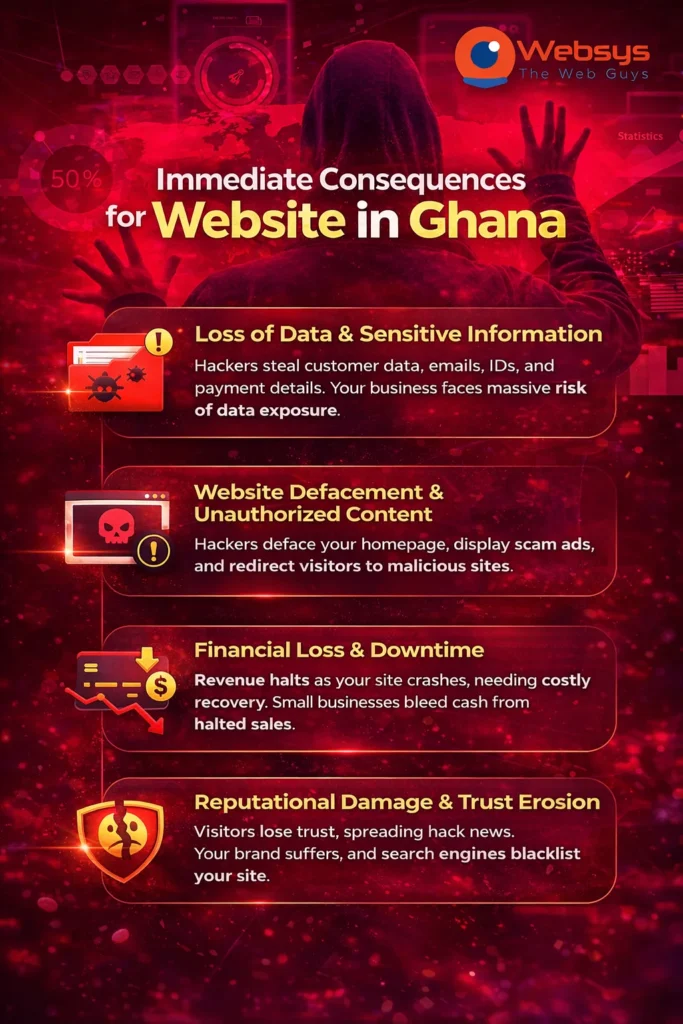
Loss of Data & Sensitive Information
Data is either erased or leaked publicly when hackers raid your servers. Customers’ personal details expose your business to massive risks. Trust shatters as Ghanaian business data protection crumbles under attack.
- Attackers swiftly exfiltrate emails, IDs, and payment info via backdoors.
- A government portal breach once leaked over 700,000 citizen records via SQL flaws.
- You scramble to notify affected users, only to face regulatory heat immediately.
- Recovery drags on without reliable, solid cloud backup systems in place.
Website Defacement & Unauthorized Content
Hackers plaster your homepage with rude messages or scam ads overnight. Visitors see chaos rather than your brand, which drives them away. Website defacement instantly turns professional sites into jokes.
- Malicious redirects send users to phishing pages you never approved.
E-commerce platforms here recently lost 45,000 card details to skimming scripts. - Your credibility tanks as social shares spread the ugly, altered pages far and wide.
- Cleaning up demands expert help to root out every hidden trace left behind.
Financial Loss & Downtime
Revenue stops flowing when your site crashes or scares off buyers. Ghana recently lost GH¢38 million to cybercrime in just 18 months. Downtime compounds the hit with every hour offline.
- Hackers encrypt files on websites with ransomware, demanding payments you hesitate to make.
- Small firms bleed cash from halted sales and urgent recovery hires alike.
- One fintech hack here costs GH¢2.3 million through database exploits alone.
- You pay experts, upgrades, and fines while competitors steal your market share.
Reputational Damage & Trust Erosion
Customers ditch you after seeing your site compromised so publicly. Word spreads fast on social media about unreliable service. Website downtime erodes faith, which takes years to rebuild.
- Negative reviews are piling up as frustrated users share screenshots of hacks everywhere.
- Supply chain breaches hit 12 Ghana firms, costing GH¢6.5 million and client trust.
- Partners pull back, fearing association with your now-tainted brand image.
- Loyal buyers demand proof of fixes before returning to shop again confidently.
Search Engine Blacklisting & SEO Damage
Google flags your site as dangerous, slashing organic traffic overnight. Rankings you built vanish under the SEO impact of hacked websites. Recovery demands painstaking cleanup and patience.
- Malware triggers automatic blacklists that block your pages from search results.
- A local university was offline for six weeks due to ransomware, likely facing this too.
- You lose leads while rebuilding backlinks and tediously submitting review requests.
- Months pass before visibility returns, handing rivals a golden opportunity.
Legal & Regulatory Consequences in Ghana
Breaches trigger swift action from the Ghana Data Protection Commission. The Data Protection Act demands accountability you can’t ignore easily. Fines and mandates pile up fast for non-compliant firms.
- Violators face hefty penalties under Act 843 for failing to properly secure user data.
- MTN Ghana was recently the subject of a probe for unauthorized access to customer data.
- You must report incidents within 72 hours or risk severe sanctions.
- Lawsuits from affected customers quickly add legal fees to your growing bill.
- Ongoing audits and compliance upgrades drain time and budgets in the long term.
- CERT-GH steps in to investigate, amplifying scrutiny of your operations.
Read more: Why Every Business Website in Ghana Needs SSL Security
Signs Your Website Has Been Hacked
Early detection often saves your Ghanaian website from total ruin. Watch for these red flags that scream trouble loud. You catch problems before they explode into crises.
- Traffic plummets suddenly or spikes from weird global locations overnight.
- Pages load more slowly, with errors popping up where they never did before.
- Unknown admin logins appear clearly in your dashboard activity logs.
- Content changes subtly, like new links you didn’t add yourself anywhere.
- A hypothetical clinic site in Tamale starts redirecting to odd pharmacies. (This example clarifies redirect risks for better understanding.)
- Antivirus flags malware, or website vulnerability detection tools, alert urgently.
- Google Search Console warns of security issues needing your attention now.
What to Do Immediately After Your Website Is Hacked
Speed beats panic when your website gets hacked. Isolate the threat first to prevent further damage. Follow these steps to regain control swiftly and surely.
- Take your entire site offline immediately to halt hacker activity.
- Change all passwords, including hosting and FTP, to strong, unique ones now.
- Run full malware scans with tools like Sucuri or WordPress security plugins.
- Notify your host, the Ghana Cyber Security Authority, and affected customers promptly.
- Restore clean files from a recent website backup if you set one up wisely.
- Hire pros for deep cleaning since DIY fixes often miss hidden backdoors.
- Monitor traffic and logs closely post-recovery to catch lingering issues early.
- Update everything from plugins to core software to avoid old vulnerabilities.
Case Studies & Local Ghana Examples
Real breaches reveal patterns you can learn from directly. Ghana incidents show hackers hit hard across sectors. You avoid repeats by studying these wake-up calls.
- A SQL injection in the government portal exposed 700,000 citizens’ records to the public. Attackers grabbed IDs and docs, sparking outrage and fixes.
- MTN Ghana’s data incident drew a GDPC probe for access lapses under Act 843. Customers worried while regulators demanded full transparency fast.
- E-commerce skimmers stole 45,000 card details, crushing trust in the platform overnight. Owners rebuilt with better firewall protection and monitoring tools.
- The university ransomware locked networks for six weeks, costing GH¢3.4 million in total. Classes halted as admins paid dearly for recovery efforts.
- Lessons scream for proactive backups and regular audits across all sites.
Conclusion
Hackers turn thriving Ghanaian websites into nightmares without warning. You face data loss, cash drains, and trust killers head-on. Legal woes compound the mess under strict local laws. Signs appear if you stay vigilant daily. Quick steps and backups pull you back faster, always. These cases prove that no one stays safe without preparation. Don’t wait for your website to get hacked; the moment to strike is unexpected. Secure your site with WebSys Technology‘s Website Backup services today.
Enjoy automatic daily backups, securely stored in the cloud. Restore your entire site with one click, even after major attacks. Tailored for Ghanaian businesses, it integrates seamlessly with local hosting platforms such as cPanel or WordPress. Get peace of mind plus a free security audit on signup. Act now—protect your digital lifeline before hackers do. Your business deserves unbreakable website cybersecurity. Sign up and sleep easy tonight.
GET IN TOUCH