

In March 2024, cybercriminals attacked the Electricity Company of Ghana. The ransomware completely disabled their critical systems for an entire week. Financial losses? A staggering GH¢400-500 million ($34-42 million USD). Millions of customers couldn’t access electricity services. This catastrophe highlights one crucial truth: choosing the wrong technology partner can devastate your business.
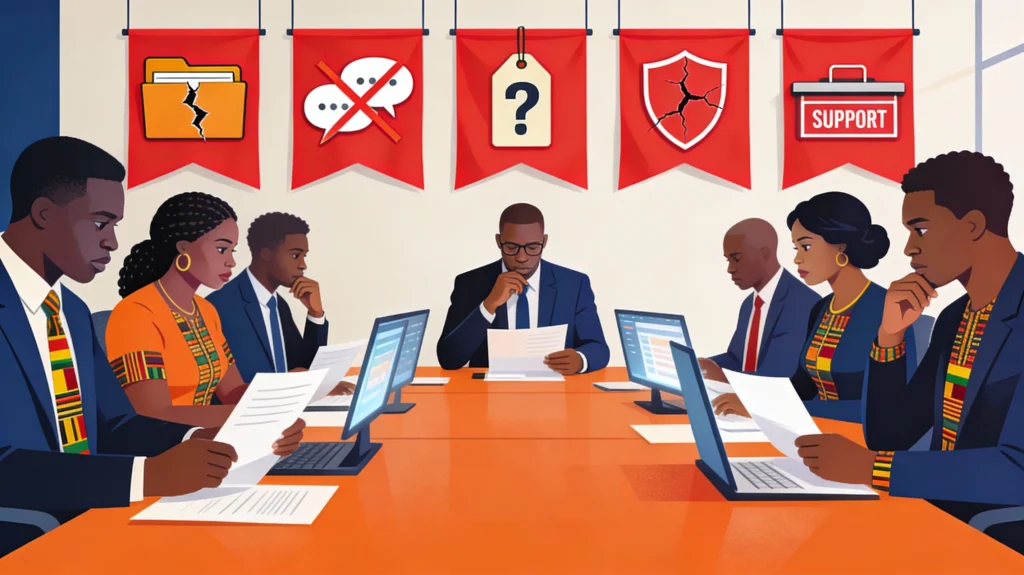
But how to choose between Tech companies in Ghana without repeating ECG’s nightmare? What separates reliable tech service providers from those who’ll drain your budget? The answers lie in recognizing the following five critical warning signs before you sign that contract.
- No proven local track record or verifiable portfolio
- Poor communication habits and delayed responses consistently
- Hidden costs lurking behind vague pricing models
- Weak cybersecurity protocols with zero compliance standards
- No post-launch support or maintenance commitment whatsoever
Reports revealed that Ghana’s ICT sector generates1.5 billion cedis annually in revenue. The market is expanding rapidly toward $5 billion by 2030. But this growth brings both tremendous opportunity and significant risk. The country experienced 997% increase in cybersecurity breaches during Q1 2024. That’s 1.2 million breaches in just three months alone.
Let’s dive deep into each warning sign. You’ll learn exactly what to watch for. More importantly, you’ll discover how to protect your investment.
Red Flag #1: No Proven Track Record or Local Portfolio
Can they show you real work from Ghanaian businesses? That’s your first critical question when evaluating service providers. Many companies claim expertise but can’t demonstrate actual results. They’ll show generic portfolios filled with stock images and vague descriptions.
Warning signs you shouldn’t ignore:
- No verifiable case studies from businesses in Accra or Ghana
- Can’t provide minimum three client references you can actually contact
- Portfolio features international work but nothing from local industries
- Recently established with zero industry reputation or documented experience
- Descriptions remain vague like “we’ve worked with many satisfied clients”
- No presence on the Business Ghana directory or similar platforms
Here’s why this matters tremendously for your business success. Research shows 60% of Ghanaian SMEs struggle with technology adoption. They’re using only less sophisticated technologies like social media platforms. Less than 5% leverage advanced solutions such as AI. Why? Many hired inexperienced providers who couldn’t navigate local challenges.
What you should do instead:
- Request detailed client testimonials from a minimum of three Ghanaian businesses
- Ask for measurable results like traffic increases or sales growth
- Check their Google Business profile for authentic verified reviews
- Verify listings on Business Ghana or professional directories
- Interview their previous clients about actual project experiences
Technology firms in Accra should demonstrate work across local industries. Retail, hospitality, education, and healthcare—these sectors prove versatility and market understanding. Don’t settle for promises; demand documented proof of success.
Red Flag #2: Poor Communication & Delayed Responses
Communication failures cost money, time, and customer trust. They signal deeper organizational problems you’ll face throughout project execution.
Watch for these communication red flags:
- Takes three or more days to respond to inquiries
- Provides vague answers when you ask specific technical questions
- Won’t commit to a clear project timeline upfront
- Explains everything using complex IT jargon without simplification
- Misses scheduled meetings without advance notice or valid explanations
- Doesn’t ask clarifying questions about your business needs
Poor communication contributed to Ghana’s National Service Secretariat database breach. That misconfiguration exposed personal data of 700,000 citizens across Ghana. Delayed breach detection and inadequate vendor coordination worsened the damage. This remains one of Ghana’s largest data breaches in history.
How to ensure better communication:
- Test their responsiveness during your initial contact phase carefully
- Ask specifically how they handle urgent issues requiring immediate attention
- Request a dedicated account manager serving as your single point of contact
- Establish a clear communication protocol before signing any contractual agreements
- Define service level agreements (SLAs) specifying response time expectations
Selecting IT partners means choosing long-term collaborators, not just vendors. Communication breakdowns lead to misaligned expectations and project failures. But unclear pricing? That creates even worse financial consequences.
Red Flag #3: Hidden Costs & Unclear Pricing Models
Transparent pricing separates professional IT consulting firms from questionable operators. Ghana’s ICT sector breaks down into 900 million cedis in hardware. Another 100 million goes to software sales annually. IT services comprise 300 million cedis of the market. Understanding these numbers helps evaluate fair pricing structures.
Pricing red flags requiring immediate attention:
- Quotes use vague terms like “starting from” without itemization
- No mention of ongoing maintenance or support costs anywhere
- Mysterious charges labeled “setup fees” or “miscellaneous expenses”
- Pricing suddenly changes after initial discussions conclude
- Won’t provide a written cost estimate before demanding commitment
- Claims they’ll “handle everything” for one suspiciously low amount
Here’s a comparison showing the critical difference:
| Red Flag Pricing | Transparent Pricing |
| “From GH¢5,000” | “GH¢8,500 total breakdown provided” |
| Maintenance “TBD later” | “GH¢500/month includes hosting, updates, security” |
| Vague deliverables | Itemized scope with payment milestones |
| Hidden licensing fees | All software costs are specified upfront |
Ghanaian SMEs operate with constrained business technology needs and budgets. Hidden costs can derail your entire digital transformation initiative. No clear breakdown means no ROI tracking is possible.
Protect yourself with these practices:
- Demand completely itemized quotes presented in Ghana cedis
- Ask about ALL potential costs including hosting, licenses, updates
- Request a breakdown of design, development, deployment, and training expenses
- Get absolutely everything documented in writing before the project starts
- Establish a payment schedule directly tied to measurable deliverables
Cost-effective technology doesn’t mean choosing the cheapest option available. It means transparent, predictable, and value-driven technology investment decisions. Professional Ghana technology service providers willingly explain every cedi you’ll spend.
Red Flag #4: Weak Cybersecurity & No Compliance Standards
Ghana experienced1.2 million cybersecurity breaches in Q1 2024 alone. That represents a shocking 997% increase compared to Q4 2023. The nation has suffered over 4 million breaches since 2004. That’s not a distant threat—it’s happening right now. Your potential tech service providers must prioritize security from day one.
Security warning signs you can’t afford ignoring:
- No discussion about security protocols or data protection measures
- Can’t explain how they’ll protect your sensitive business data
- Lacks a disaster recovery plan or backup system documentation
- Never asks about your compliance needs or regulatory requirements
- Holds no certifications for ISO standards or data protection
- Proposes outdated technologies or vulnerable platform choices
Digital business solutions must include robust security from day one. Ghana licensed 51 cybersecurity players in 2024 for good reason. The threat landscape continues to intensify across West African markets.
Essential security questions for vendor assessment:
- How exactly will you protect our customer data daily?
- What encryption standards do you implement for storage?
- Describe your disaster recovery and backup procedures thoroughly
- Which international security standards guide your development practices?
- How quickly can you restore operations after incidents?
- What ongoing security monitoring and updates are included?
Insist on written security protocols within your contract documentation. Verify they follow international standards even without formal certification. Include specific data protection clauses protecting your business interests. Your corporate IT infrastructure deserves nothing less than comprehensive protection.
Red Flag #5: No Post-Launch Support or Maintenance Plan
Picture this scenario happening to your business tomorrow. Your new website launches perfectly. Everything works beautifully initially. Then something breaks unexpectedly at 3 AM. You call your developer frantically. No answer. They’ve vanished completely.
Support-related red flags demanding your attention:
- Contract terminates completely at the project delivery date
- No ongoing maintenance contracts offered or even discussed
- Vague promises like “we’ll help if you need us”
- Every post-launch change triggers additional undisclosed charges
- Zero training provided for your staff on operating systems
- Only interested in discussing new projects, never supports
Ghana’s digital infrastructure faces unique challenges requiring ongoing attention. Power fluctuations, connectivity issues, security updates—these demand responsive support. Your business can’t afford extended downtime affecting customers.
Protect your investment through these requirements:
- Insist on formal maintenance agreement BEFORE signing anything
- Define specific support hours and guaranteed response times
- Clarify exactly what’s included versus additional charges
- Request comprehensive training for staff managing systems
- Demand complete documentation and knowledge transfer processes
- Establish emergency contact protocol for critical issues
B2B technology services in Ghana extend far beyond initial deployment. The relationship evolves continuously as your business grows. Your technology partners should grow alongside you, not disappear.
Professional Ghana IT companies understand this fundamental truth completely. They build relationships, not just deliver projects temporarily.
Read more: How to Choose Between Tech Companies in Ghana for Your Next Project
Before You Sign: Your Essential Vetting Checklist
Wondering how to choose IT company in Ghana with confidence? Use this comprehensive checklist for thorough due diligence:
Experience & Credibility Verification
- ☑ Can they provide three verifiable local client references?
- ☑ Do Google reviews confirm their proven track record?
- ☑ Is their portfolio specific to Ghana, not generic international work?
- ☑ How many years have they operated in Accra?
Communication & Project Management Process
- ☑ Did they respond within 24 hours initially?
- ☑ Have they provided a detailed project plan with a timeline?
- ☑ Is a dedicated point of contact assigned to you?
- ☑ Do they ask clarifying questions about needs?
Pricing Transparency & Contract Terms
- ☑ Is the quote completely itemized in Ghana cedis?
- ☑ Are maintenance and support costs clearly defined?
- ☑ Does contract specify measurable deliverables with dates?
- ☑ Have you reviewed all terms before signing?
Security Standards & Compliance
- ☑ Did they discuss your data protection requirements?
- ☑ Can they explain security protocols in detail?
- ☑ Is disaster recovery plan documented and tested?
- ☑ Do they provide ongoing security monitoring?
Support & Partnership Commitment
- ☑ Is post-launch support included in agreement?
- ☑ What response time commitments are guaranteed?
- ☑ Will they provide comprehensive staff training?
- ☑ Is documentation provided for future reference?
This checklist transforms vendor selection from guesswork into systematic evaluation.
Read more: How Much Do Tech Companies in Ghana Charge for Website Development?
Partner with Confidence, Not Hope
Ghana’s technology sector is experiencing explosive growth currently. The market is reaching toward $5 billion by 2030. But rapid growth brings both tremendous opportunities and significant risks.
You now know the five critical red flags. You understand what to look for in tech companies in Ghana. Don’t rush this important due diligence process. Your enterprise solutions deserve careful vendor assessment and selection.
The right technology partner protects your investment long-term. They prevent the disasters that destroyed ECG’s operations. They build systems processing millions of transactions reliably. Most importantly, they become strategic advisors driving your digital transformation journey.
Choose WebSys Technology for Red-Flag-Free Partnerships
At WebSys Technology, we’ve spent over 13 years building trust with Accra tech firms and businesses across Ghana. Our transparent approach eliminates pricing surprises completely.
We don’t just deliver projects and disappear forever. We become your strategic technology partner invested in your success. From initial strategy through ongoing optimization, we stand beside you. Our proven track record speaks louder than promises ever could.
Ready to discuss your next project without red flags? Contact WebSys Technology today for a free, no-obligation consultation. Let’s build something great together for your business.
Visit websysgh.com or call us now. Your success story starts with one conversation.
Read more: Top Tech Companies in Ghana for 2026: A Complete Business Guide